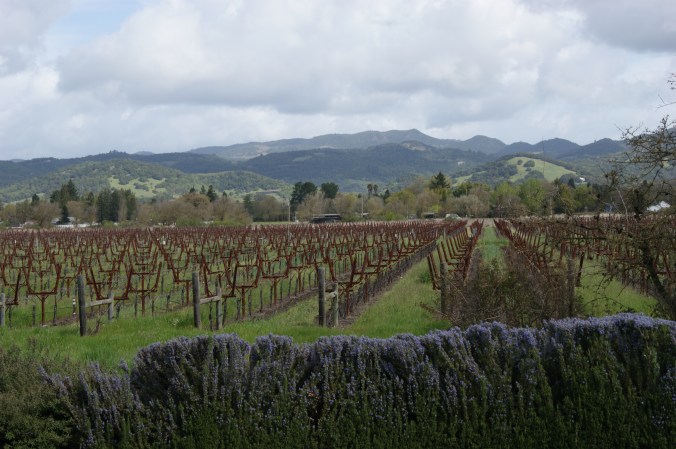
Going through the 800+ pictures I took during April’s California trip and ran across this: our backyard at the rental house in Sonoma. This view has been in the back of my mind ever since, nagging me with sweetness, beauty and rest.
Going through the 800+ pictures I took during April’s California trip and ran across this: our backyard at the rental house in Sonoma. This view has been in the back of my mind ever since, nagging me with sweetness, beauty and rest.
I try not to blog-rant very often – but this afternoon I can’t help myself. The announcement about Susan G. Komen For the Cure halting funding for breast cancer screenings at Planned Parenthood pushed me right over the edge.
You see, not all that many years ago, Planned Parenthood could have saved my life.
Between student loans, a starting youth ministry salary and a few other medical debts, I was cash poor. What’s more, I was underinsured – my health insurance provider treated womanhood as a preexisting condition and wasn’t much help when it came to gynecological screenings and other services. So, rather than finding a health care provider I couldn’t afford to pay, I went to Planned Parenthood.
Over the course of four years, PP was my provider and resource for women’s health. I didn’t “freeload” – their sliding payment scale made it possible for me to pay what I could. I paid more than some women, and less than others. In a sense, we were all in it together.
I didn’t get an abortion as a Planned Parenthood client. I suppose I could have if I’d had and felt the need, but that isn’t the point. The point is that I got the care I needed. Because I could afford it, I scheduled those necessary yearly appointments. I actually showed up for annual screenings instead of ignoring the reminder cards that arrived in my mailbox. And, when one of those annual exams indicated the possibility of cervical cancer – I was able to afford the colposcopy that let me know the abnormal cells were benign.
If it had been cancer, and I hadn’t had Planned Parenthood, I wouldn’t have known until it was too late.
—
When I look at the news and see the attacks made on Planned Parenthood by some politicians and religious leaders, the demands that Planned Parenthood lose all of its funding because 3% of their budget goes towards abortions – when I see these things it literally makes me sick to my stomach.

What Planned Parenthood Actually Does
The cancer screenings, STI screenings and treatment, family planning services (including contraception) and other women’s health care – all of that should be thrown away (along with the women and men whose health and lives depend upon it) because of one issue? I don’t think so.
Regardless of your stance on abortion, you should care about the consequences of this sort of defunding. Regardless of your stance on abortion, you should care that people who live at, below or near the poverty line will be hardest hit by this. In the end, this is not about abortion. This is about a callous disregard for the lives of men and women who have no access to the top of the line health care that policymakers seem to take for granted – and it is unacceptable.
If policymakers really want to take down Planned Parenthood, if they are truly hell bent upon it – then they had better be prepared to create and fund other avenues for acquiring low-cost and free women’s healthcare. Those avenues had better be prepared to accept ALL of the people who currently rely upon Planned Parenthood, and then some. And they had better do it BEFORE they hamstring what is already in place.
If they don’t – if we don’t – people will fall through the cracks. Cancer will go undetected. STI rates and unplanned pregnancy rates will increase – and there will be even more women in search of the abortions we tried to eradicate. People will die – and their blood will be on our hands.
I’m not willing to see that happen. And I’m not willing to tear down an organization that has helped millions of women and men (including me) to be healthy, educated and whole. So I’m ranting about it, but I’ll also be writing letters and helping to educate others about the need for quality affordable community healthcare.
What will you do?
 I love the Harry Potter books and films. I’m pretty much smitten with the characters, the detailed map of a magical world both behind and within our own muggle realm, the ways that the mundane struggles of kids in a boarding school become enmeshed with the cosmic struggles of good versus evil…all of it. Man, oh man, do I love Harry Potter.
Beyond my fascination with the story (I’m a super geek, as demonstrated by my passion for science fiction and high fantasy narratives), I’ve also learned something intriguing about myself while following Harry and his comrades through those ever-shifting halls: I most strongly identify with Minerva McGonagall, the no-nonsense yet compassionate professor of transfiguration at Hogwarts.
At first this realization was rather alarming. If I identify with one of the profs, does that mean I’m getting old? Why McGonagall? Why not that lovely Luna Lovegood? Why not smart and perpetually-prepared Hermione Granger? There was certainly a time in my life when I might have identified with either of them – and not one of the teachers.
I suppose that on the surface the answer is pretty obvious. I am getting older and now I’m a teacher of sorts – a figure within the institution whose job is to teach, care for and walk alongside teenagers. Of course I identify with one of the professors!
But why McGonagall? Is it because she’s one of the few women on staff? Perhaps. But after watching the last of the films (HP 7.2) a couple times and experiencing her all-consuming desire to protect those kids with such intense, gut-wrenching determination that during both showings I found myself shaking, teary-eyed in the theater seat – well, after that I’ve begun to think that there might be a bit more to this than my age, profession or gender.
It could be that I’m ridiculous. A grown woman weeping during magical movie battles? Come on now…
I am, admittedly, a little bit on the silly side more often than not. But I don’t think that’s what’s going on either. Instead, I believe something in Rowling’s storytelling has struck a chord deep inside me, rattling loose an instinct that I never really knew I had, or at least never recognized as such: the desire to protect. When I read the Harry Potter books (or watch the films), especially from Order of the Phoenix onward, and I see the way the world is crumbling into chaos around those kids, every fiber of my being screams “They’re only children! Why does it have to be them who must save the world??”. I reckon Minerva McGonagall wonders the same thing.
In similar fashion, when I look at this world of ours and see the way chaos laps at us from every direction, every bit of me starts to howl that same refrain. Why must it be these kids, these precious ones in my care who must solve our problems and stand in the face of so much hatred, violence and destruction? “They’re only children! Why does it have to be them who must save the world??”
So there it is. I want to protect “my” kids. I want to keep them from harm and put a wicked boot in anyone and anything that threatens their well-being. It’s a normal, perhaps maternal/parental instinct – and yet it is also deeply unsettling. Why? Because now that I know it is there, I have to tend it.
A drive to protect can become an act of violence against the very person or thing you are protecting. Hemming someone in, eating away at her freedom of movement or voice or action, perpetually doing for the other instead of letting him do for himself – all of these things ultimately harm more than they help. And yet they are so tempting when you love someone and yearn for their safety.
This is why I both identify with and feel drawn to the character of Professor McGonagall: in spite of her consuming desire to protect the students at Hogwarts, she only does what she is especially able to do and then she gets out of their way. She knows her students. She knows their gifts. And even though it pains her to see them in harm’s way, she recognizes that they are a part of things and must be allowed to help. So she does her bit and helps those students to discern and play out their parts. She’d die for them if it came to that, but she won’t force them to die the slow death that comes from squelched talents, hopes and dreams all in the name of safety.
I want to protect “my” kids, but not at the expense of their potential. It’s terribly risky business, but that’s who I want to be – which is why I’m a Minerva McGonagall.
Secretly, I’m a bit of a craft nut. I’ve been embracing it more and more in the last couple of years, in part because I discovered amigurumi (a type of crochet that makes delightful little stuffed animals – see the last two pictures if you’re wondering what that looks like). Could be I’m just getting older and turning into my mother.
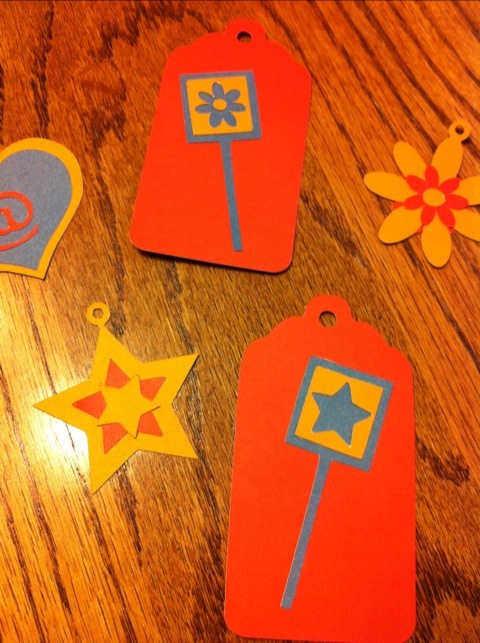
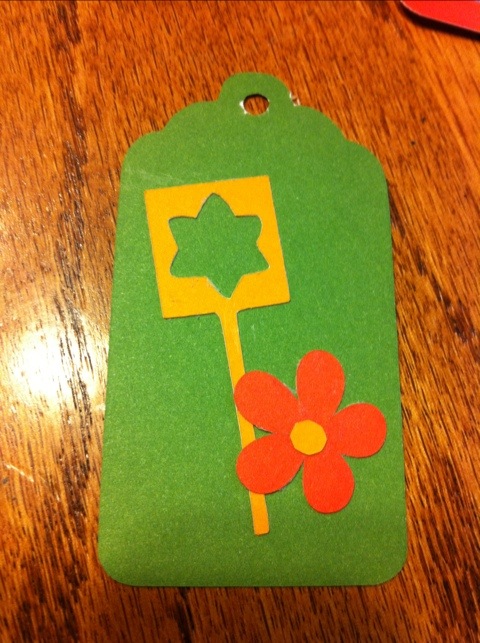
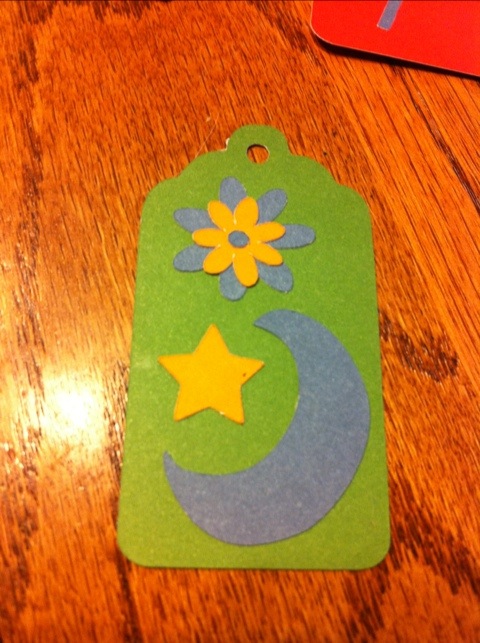
Anyhow, for our anniversary (Four years! Woohoo!) Chuck got me a Cricut machine – and I’m thrilled! It cuts paper into all sorts of fun shapes, depending upon the design cartridge one is using. Not the sort of thing I would have wanted ten years ago, but now I’m geeking out about it.
What can one do with these little paper cuttings, you ask? For starters, I’m working on homemade tags (for gifts as well as for the crocheted critters I may be selling around Christmas this year, if I get cracking…). They’re not quite done – I plan to give them a coat of modge podge to make them shiny/strong – but wanted to share them anyway. Enjoy:


**Note** I wrote this on July 22, 2011 – after hearing about the massacre that took place on Utoya that day. Because I was at camp, and because I felt too raw to do anything beyond scribbling it out in longhand, the post didn’t make it here until today. Much has come to light in the days that have followed, but this post does not reflect any of that information.
In 1999, the summer after my junior year of college, I was sent to Norway to represent the Council of Ecumenical Student Christian Ministries (CESCM) at a World Student Christian Federation (WSCF) conference held in honor of a milestone anniversary of the Norwegian Student Christian Movement. Though I flew into Oslo and spent the afternoon finding my way through the city and its famous sculpture park, the event actually took place on a tiny island outside of the capital: Utoya.
It was the first time I traveled outside of the US completely on my own, the first time I was the only US student present in a large gathering of people from around the world, the first time I found myself in a position where there weren’t others who shared my assumptions, my norms, my cultural biases. And it was the last time I traveled internationally before 9-11. The experience was transformative…and it hurt.
There were various speakers called in to discuss the concept of utopia and whether or not it has a place within Christian ecumenical dialogue/work. The talks were fascinating, but not what I carried back with me when I returned home to Texas. What’s stuck with me were the one on one conversations, the relationships formed in the in between times.
In between speakers and other scheduled activities, we had large spans of free time to mingle – time that turned into me fielding questions and accusations about the US government’s involvement in world affairs. Whether I liked it or not, I was the only representative of the US on that island, so every question, every grievance fell in my lap.
In particular, a Serbian student named Lazar took every opportunity to lay into me for the NATO bombings in Serbia. He’d never met an American, and I’d never met a Serbian. We only knew what our respective news outlets and politicians were telling us – so it started off with some rough encounters. There wasn’t much I could say because I was so ignorant of the situation, the history, the messiness of it all (on all sides). He’d accuse, I’d listen. He’d raise his voice as he recounted events I’d never heard of. I’d quietly take it in, awash in disbelief or horror or anger or grief.
Somewhere in those encounters, a miracle took place. We became friends. Noting my silence, Lazar started asking questions instead of lobbing accusations. Together, we started wading through layers of propaganda, both Serbian and American. Together, we discovered gray in the midst of black and white. Together, we learned humility.
Transformation took place on that island. Relational webs were woven from that point on the globe and stretched across borders, oceans, ideologies. Dayanthi in Sri Lanka, Marcus in Finland, Thandiwe in Zambia, Lazar in Serbia, Moatlhudi in South Africa, Thorsten in Germany, Lara in the US…we (and many others) experienced a taste of what utopia might bring. In those moments of listening, laughing, straining and stretching, we caught a shimmer of the Kin-dom of God.
—–
So much has changed in the years that have passed. Though the world was never “safe” or “secure”, the specter of terror has crept into new markets. That relational web still remains, but the ground beneath it has shifted and begun to crumble. These last twelve years I’ve teetered between cynicism and hope – one moment knowing the hopes we shared on Utoya are a pipe dream, and another moment trusting that even in the worst of times the Kin-dom is still breaking into the world.
And then, today, during nap time at our high school summer camp, I got word via Twitter of another attack. Oslo is trending – a bomb has gone off in the city – and Utoya has also become a hashtag. Today that island, upon which my life was changed, is stained with the blood of children – campers the same age as these teens sleeping around me. Campers murdered by someone who would do anything to destroy these webs that draw us near to one another.
In the midst of this terrible news, and this consuming grief, I’m completely at a loss. What can be done to counter such hatred? What can be done when utopia is stained with the blood of so many innocent kids?
I have no idea – except that I know the web must continue to be woven.
Thy Kin-dom come…on earth as it is in heaven.
A Gathering Voices Post
This weekend I’ll be leading workshops on some hows and whys of talking about sex(uality) and embodiment in our local congregations. It’s a tricky subject and one that, though I’ve somehow managed to acquire a “local expert” label, makes me uncomfortable every time I prepare to talk about it. Creating the slides, choosing the right words, preparing the handouts – in all of these things, I catch myself fighting back anxiety by holding my breath. Which, of course, begs the question: If you’re so uncomfortable, why talk about sexuality at all?
Seriously, should we talk about these tough topics in church? I not only believe we should, but also that we must – and here’s why:
The truth is, we are going to disagree – especially when conversation leads us to questions about “the” biblical understanding of sex. Some of us will insist that the “traditional way” is the only biblical way, and some of us will point out biblical passages that don’t fit neatly into that traditional understanding. Some of us will advocate for programs that teach about everything including contraception, and some of us will demand abstinence-only curriculum. At times, our conversations may will be painful and frightening – but none of these realities are an adequate excuse for not talking about sex(uality) in our congregations.
So I wonder:
This spring has given me an incredible amount of joy. One moment winter clung to us with ferocity, and the next moment God brought out the highlighters… pink, purple, yellow, green – color first creeping and then exploding into the world.
I’m not always all that good at joy. But, as usual, new life came and shook me up just in the nick of time!
(Originally written as a Gathering Voices post on April 8, 2011)
As I type these words, I’m sitting in a Catholic retreat center in Saint Louis with two dear friends/colleagues. The official purpose of this meeting of the minds is a writing retreat (we’re chewing on something that has the potential to be pretty exciting!). Computers are out, keys clicking a symphony of ideas – and we really are getting some serious work done.
Yet, in many ways, the real work is happening aside from the writing. We laugh. We feast. We pad around in bare feet for late-night conversation. Words ebb and flow, dancing from silly to vulnerable and back again. We dream out loud. Exhausted, we sleep hard so we can get up and do it all again. This is the labor of soul friends.
Friends have always been important to me, and at the same time, friendship has often been difficult. As an “army brat”, moving from place to place, I learned early on that friendships can swiftly evolve or end and take lots of work to maintain – especially over geographical distance. Often, it was easier to just move on.
As a minister, I’ve moved with the same sort of frequent irregularity that is becoming more and more characteristic of young adults across the board. Consequently, I have sometimes found myself living in a new place, isolated except for the rich tapestry of friendships that exist beyond my physical locale. But I haven’t always reached for the tapestry. Hiding behind my “introvert badge”, I’ve instead savored my isolation, even wallowed in it – only to discover somewhere down the road that (go figure!) my spirit was literally starving.
I’m beginning to understand that friendships aren’t “just” friendships. Friendships (and the work of cultivating them) are a form of spiritual discipline, just like prayer or scripture reading or mindful eating. When I don’t pray, my spirit suffers. When I don’t spend time reading the Word, my spirit/mind become impoverished. When I don’t eat mindfully, my spirit/body become stressed and broken. And when I don’t practice the art of friendship, my spirit begins to turn in on itself.
As it turns out, I’m not alone in this. The friends who journey alongside me need this too. It is part of the human mold, this yearning to be connected in meaningful relationship. So now, we carve out time. One small group of soul friends meets every fall, another meets for both business and relationship twice a year, and this trio will meet each spring. We stay in conversation via social media throughout the year, but we also need this time set apart to laugh and cry and dream “in the flesh”.
While, to a casual observer, there’s nothing about these gatherings that screams “work”, this is holy work all the same. It is part of our vocation (not just as ministers, but as Christians) to be the best friends we can be…and that requires practice!
Speaking of which, my friends are waiting and it’s time to get back to work…
(This was originally written for Gathering Voices – The Thoughtful Christian Blog, a blog which I highly recommend you check out in the near future!)
Having grown up in a border city, it is safe to say that I know more (at least experientially) about the US/Mexico border than your average Midwesterner. So, when I went to our local ministerial association meeting this week (knowing that the topic was immigration and border issues), I was attending in order to be supportive of the presenters and the people affected by our immigration policies. I didn’t anticipate that I would learn much and I certainly didn’t expect to have my mind blown.
Luckily, a mindset tinged with arrogance is just rigid enough to be broken open…
There was lots of information presented that was new to me. I’m most familiar with the stretch of border that runs between El Paso and Ciudad Juarez, but the presenters had attended a program in San Diego/Tijuana. The program, run through the Daniel F. Romero Center for Border Ministries, provides immersion opportunities in Tijuana as well as space/language for theological reflection about immigration and the economic disparity that exists between the US and Mexico.
The stories shared during our meeting piqued my interest and tugged at my heart, but for some reason what really got me was a single photograph of an official sign on the border. The sign reads: US Property – No Trespassing.
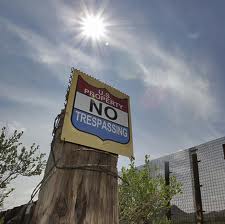 When I saw the sign, the word “trespassing” struck me like lightning. I’ve long been familiar with the language of the immigration debate: illegal, alien, undocumented, migrant, immigrant, and so on. I’ve heard the arguments back and forth – the position of scarcity (“those people are taking our jobs, our resources, our money”), the position of abundance and welcome (“Give me your tired, your poor, Your huddled masses yearning to breathe free…”), the Hebrew Bible mandates for welcoming the stranger and caring for the alien (passages like Exodus 22:21-24 and Hebrews 13:2). But for some reason I’d never connected “illegal immigration” with trespassing.
Personally, I have always been more swayed by the position of abundance and those passages from the Hebrew Bible. In my mind, immigration and our treatment of “the other” has always been about justice and the dignity of all people as children of God, yet justice, dignity and abundance don’t seem to be values universally claimed by those who claim the name of Christ. Finding the language needed to explain myself to Christians who are passionately against undocumented immigrants has always been difficult for me – but now that I’ve seen that border sign, I think I’ve found another track, something so basic that all stripes of Christians know it in their bones: the Lord’s Prayer.
If, at its core, this immigration debate is about trespassing (as that official border sign asserts), then it makes sense that we followers of Christ would contemplate the issues and people involved in light of the prayer that he taught his followers. As a person committed to thoughtful Christianity, I won’t come down and say that you must come to the same conclusion to which I have come (I know my own tendency towards arrogance well enough to see the danger and hypocrisy in that). But I do hope that each Sunday, as we ask God to “forgive us our trespasses as we forgive those who trespass against us,” we all might take a moment to meditate upon the lives of the undocumented immigrants who live amongst us – and use our holy imagination to contemplate what such forgiveness could look like if we (and they) were to live it out in the world.
Scripture: Matthew 17:1-9 (NRSV)
Six days later, Jesus took with him Peter and James and his brother John and led them up a high mountain, by themselves. And he was transfigured before them, and his face shone like the sun, and his clothes became dazzling white. Suddenly there appeared to them Moses and Elijah, talking with him. Then Peter said to Jesus, “Lord, it is good for us to be here; if you wish, I will make three dwellings here, one for you, one for Moses, and one for Elijah.” While he was still speaking, suddenly a bright cloud overshadowed them, and from the cloud a voice said, “This is my Son, the Beloved; with him I am well pleased; listen to him!” When the disciples heard this, they fell to the ground and were overcome by fear. But Jesus came and touched them, saying, “Get up and do not be afraid.” And when they looked up, they saw no one except Jesus himself alone.
As they were coming down the mountain, Jesus ordered them, “Tell no one about the vision until after the Son of Man has been raised from the dead.”
SERMON – “Nobody Puts Jesus in a Box!” (Notes from sermon preached at Hillside Christian Church on March 6, 2011)
In this morning’s lectionary text, we are presented with Matthew’s rendition of the Transfiguration. It’s an odd story, both in terms of what it paints for us and in the way that it ends as quickly as it begins.
Here’s a quick recap of the story:
Jesus takes Peter, James and John (his trusted three, or the three stooges, depending on the day) up a mountain. Jesus is turned inside out: the divine radiance inside of him bursts forth, captivating and frightening his trio of disciples. Moses and Elijah show up for a chat and Peter interrupts the three saviors to suggest that he build them each a dwelling, presumably so that they can stay on the mountain…indefinitely. God interrupts Peter with simple instructions: “This is my beloved son. LISTEN to him!” And then, when the fearful three look up from the dust, it’s simply Jesus standing with them on the mountain. Presto, chango… and back to normal. On the way back down the mountain, Jesus tells Peter and the two J’s not to talk about what happened, and they don’t. It’s not spoken of again throughout the rest of the gospel.
Now, there’s a LOT that we could talk about in this passage. It is filled with tidbits and examples of the big three aspects of scripture: human culture, human nature and the active presence of God. If we hit at the cultural side of things, we could spend hours talking about the importance of holy mountains in both the Bible and other religious texts, or we could talk about the link between this passage and the Jewish Festival of Booths. We could really dig into the presence of Moses and Elijah – and the reasons why each are considered saviors of the Jewish people. All are worthy topics.
But this morning, I’m most interested in the tension that exists between human nature and God’s activity and presence in the world.
Usually, when preachers talk about “human nature”, we’re pointing out huge sinful behaviors – the really radical stuff that is obviously at odds with the Kin-dom of God. There’s none of that nonsense going on in this morning’s text. Instead, we’ve got something different, something smaller – something that isn’t always a sin but is absolutely a part of the reality we call “human nature”.
In this morning’s text, we’ve got the desire to keep things where we can see them, the yearning for things to remain the same.
This time, the culprit is Peter. As you’ll recall, while radiant transfigured Jesus is chewing the fat with Moses and Elijah, Peter butts in and offers to build a dwelling for each of them, right there on top of the mountain.
It sounds like a thoughtful offer, albeit an odd one. I can almost hear Peter saying it: “Oh Shiny Ones, let me be of assistance! I’ll make a booth for each of you right here, to protect you from the elements. Time will no longer matter – you’ll be able to talk here as long as you like… forever, even! It will…”
But before Peter can finish his speech, God Most High cuts him off. Have you ever been interrupted by God? Usually when someone interrupts me, I get a little irritated…but when God cuts you off, you can’t help but be quiet. At least, that was the case for Peter. One moment he’s being oh so helpful, and the next, he’s face down in the dirt listening to God speak:
God politely ignores Peter’s suggestion to make “dwellings” for Jesus, Moses and Elijah. Apparently, God also ignores the presence of Moses and Elijah. Instead, God gives Peter and the two J’s some pretty basic instructions: “Jesus is my son, my beloved. I’m pleased with him (he brings me pleasure). LISTEN TO HIM.” And then, just like that, God is “gone”.
With an incident like that, it’s reasonable to ask: what the heck is going on here?
This is what I see happening in the story: Jesus has just been transfigured. He’s been turned inside out so that his most trusted disciples can see all of him – the divine as well as the human. They’ve been given an opportunity to take him in, to steep in the totality of Jesus in all of his complexity – in all of his paradoxical nature (God and Human, all rolled into one)…but rather than being still so that it could sink in, Peter does what so many of us often do: he jumps into action and tries to contain the situation. Faced with something glorious but unexpected, he tries to put Jesus in a box – perhaps so that he can keep things from changing again.
In a way, it reminds me of the movie “Dirty Dancing”. There’s a character, “Baby”, who is on the right trajectory to live up to her father’s rigid expectations. She’s going to become a doctor, or a lawyer, or a member of the peace corps. But on holiday, something new is revealed about Baby. It turns out that she can dance. I mean, she can REALLY dance. But her father doesn’t want her to dance – sure, part of that has to do with his disapproval for the guy who’s been teaching/dating her – but the core issue is that daddy doesn’t want to see his daughter in a different light. In a way, Baby’s been transfigured – and she’s glorious. But her dad doesn’t want her to change any more than she already has. So puts a kabash on the whole thing, and sticks her in the corner at the final dinner and dance show of the summer. But Johnny (her teacher/boyfriend) won’t have it. He strides in, takes Baby by the hand and says that famous line: “Nobody puts Baby in the corner.” And then Baby gets up on the stage and dances so beautifully that even her father is forced to admit that she is more than what he’d thought.
Back in our Matthew text, when the Creator interrupts Peter, it’s like God is saying “Nobody puts Jesus in the corner.” Or, in this case, nobody puts Jesus in a box.
Peter knew Jesus well – perhaps better than anyone else of the time. But even he didn’t know all of Jesus – even he couldn’t contain him with preconceived notions of who or what he should be. Yet, we fall into the trap so frequently. Conservatives, Liberals, Fundamentalists, Progressives…whatever labels we’ve applied to ourselves – sometimes we get so wrapped up in making Jesus fit in our “boxes” that we forget to listen to him.
No matter the issue (abortion, taxes, worship style, and so on), we want to be the ones who are right about Christ, and we want others to know he’s on our side of the argument.
At the end of the day, Jesus challenges each one of us, albeit in different ways. If we listen first and argue later, if we sit still and steep in his wholeness, we may end up so challenged and so moved that we also become transfigured. Heck, we might even forget to argue altogether.
As we move towards this year’s Lenten journey, let us open our eyes, ears, hearts and minds so that we can listen to Jesus – instead of forcing him into yet another box.
 Serendipity Soiree